
Bee it known: Biodiversity is critical to ecosystems
Categorie(s): Agriculture, Ecology, Food for Mankind
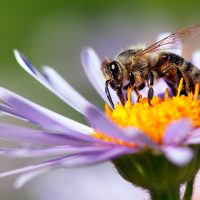
A Rutgers[1]-led study on bees shows how different species pollinate the same plants over time
Rutgers has conducted the first study showing how many more species of bees are needed to maintain crop yields when a longer-term time frame is considered.
In the paper (published in Nature Ecology & Evolution) the scientists said: “Biodiversity of the bee population is critical to maintaining the ecosystem function of crop pollination, which is critical to humanity’s food supply.”
“We found that biodiversity plays a key role in the stability of ecosystems over time,” said Natalie Lemanski, lead author on the study (researcher in the Department of Ecology, Evolution and Natural Resources at Rutgers). “You do actually need more bee species in order to get stable pollination services over a growing season and over years.”
The team focused on various populations of bees at dozens of farms in New Jersey, Pennsylvania and California and found that many more bee species were not only needed for pollination than expected over an entire flowering season, but even more were needed over multiple years.
They discovered different bee species pollinated the same types of plants at different times of the year. They also found that different bee species were the dominant pollinators on the same kind of plants in different years. Because of natural fluctuations in bee populations, researchers said, all bee species present were needed to maintain a minimum threshold of pollination during lean years.
This research shows that abundance of a species matters, but bee diversity matters even more. It’s not the same bees that are abundant at a given point in time, and variety is necessary to provide balance during a growing season – and from year to year. The study offers substantiation to a long-standing concept ecologists refer to as the “insurance hypothesis.” The idea is that ecosystems probably benefit when nature “diversifies the portfolio,” supporting multiple species of a category of a plant or animal, rather than relying on one dominant species.
They found that two to three times as many bee species were needed to meet a target level of crop pollination over the course of a growing season compared to a single date. Similarly, twice as many species were needed to provide pollination over the course of six years compared to a single year.
The researchers based their analysis on their own extensive observations of bee visits to flowers and measurements of the quantity of pollen grains deposited on individual flowers over weeks and months within a given calendar year and then over multiple years. They collected the data, with permission of farmers, at 16 blueberry farms in South Jersey, at 25 watermelon farms in Central Jersey and eastern Pennsylvania and at 36 watermelon farms in the Northern Central Valley of California.
The magnitude of increase in species needed over multiple years was remarkably consistent among crop systems when considered over the same interval of time. In addition, the fact that the relationship between timescale and the number of species needed did not level off suggests that even longer time series, spanning multiple seasons, may further bolster the need for biodiversity to ensure reliable ecosystem service.
Megan Schumann, 7 September 2022
Read also: you are worrying about the wrong bees
[1] Rutgers School of Environmental and Biological Sciences (SEBS) authors