
Fight insects without poison
Categorie(s): thematic lessons
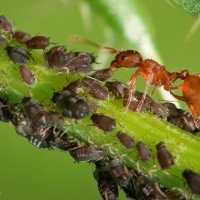
Insects are the largest group in the animal kingdom. They are living everywhere (except in the sea) and play important roles in all ecosystems. No wonder they are also around us – and sometimes a nuisance. There are many ways to kill them. These are necessary in case the insects are dangerous (think of malaria and other diseases transmitted by insects!) But when they are just irritating it is better to use less murderous methods. Also because poison is often also poisonous for us and for innocent or even useful animals.
Read the article ‘How to repel insects and pests naturally‘ where you can find some ideas.
To understand the text properly answer these questions:
1. Plants with a strong smell and poisonous plants contain chemicals meant to repel insects or even kill them. Why must plants keep insects at bay?
2. At the same time plants must attract insects. Why and how do they do that?
3. Do you know the plants mentioned in the artiicle: basil, spearmint, thyme, tansy, rosemary and wormwood, sage, peppermint, tansy, catnip and pennyroyal. Find out what they look like and what they are used for.
4. There are thousands of species of ants. Ants can be found nearly everywhere. They kill many (harmful) insects, remove waste, but also help spreading seeds. Which plants have seeds that are spread by ants, and how do they do it? Find out if you do not know.
5. Ants ‘keep’ greenflies more or less the same way we keep cows. How do they tend them en how do they use them?
6. What have mosquitoes to do with water? Why is it good to have some small fishes in the gardenpond?
7. Mosquitoes feed on plant juices. Only females who have to produce eggs need blood. Why, do you think, can they not manage with just plant juices to make eggs?
8. Some people are more attractive for mosquitoes than others. People think they ‘taste’ better. But when it has something to do with somebody’s diet, what could be the real reason?
9. Fruitflies eat rotting fruit. They are not dirty or dangerous. Normal houseflies are. Because they land on everything organic. Explain why they can easily spread spores and microbes.
10. Why do plants not need food, except some minerals. And why do carnivorous plants need insects to survive? In what kind of places do these plants grow in the wild?
Now you can start the real work.
On this subject you can do many different types of your own research. This is of course work for the summer if you do not live in a warm country!
1. You can try the different methods mentioned in the article. Make small groups in your class. Every group takes one of the types of insects and the given method. Count insects before and again after applying the stuff. The plants can be found in gardens, bust most can be bought in shops, (because they are being used as herbs, or they are nice in the garden).. They can be used in the kitchen if you have too much…
2. Explore gardens, parks or nature around your house or school to find plnats with greenflies on them. Try to find ants tending them. Can you find the name of the species? (N.B. Greenflies are not always green, sometimes black) . Do the ants of one colony visit only one plant or more? Maybe you can experiment with placing some greenflies on other plants and seeing the ants finding them (or not).
3. Interview a group of people (your class, other classes, your family) and ask if they are often bitten by mosquitoes or not . Try to find out if you can find other differences : different diets, healthy or not, use of perfumes… can you find a link?
4. Buy a carnvorous plant (or more if the sell them) and study how they catch insects. To have enough prey just keep some overripe fruit nearby.
Think of other things you can do… like finding more ways to fight insects. How did people do it in the past, ask your grandpearents. How do they do it in other countries? etc.
.