
Think again before extolling organic farming
Categorie(s): Agriculture, Biotechnology, Food for Mankind
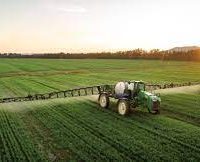
The motivation to fight hunger Julie Borlaug inherited from her grandfather, who got the Nobel Price for his work on agricultural renovations. And like him she is looking for answers in modernising.
Yes, an enormous challenge! Before the end of this century there will be ten billion inhabitants of this planet. They will be more prosperous than today, with consequences for their ways of consuming. To provide so many people with food in a way the planet can supply will be a gigantic task.
Green Nobel Price
But we have a reason for hope: we have had the same challenge before. In the 50’s and 60’s of the last century the world´s population was growing much faster than today. There were big famines in Africa, Asia and Latin America. Rescue came from Norman Borlaug, an American agriculturist. His program for modernizing agriculture, the ‘Green Revolution‘, drove the food production up. In 1970 he was rewarded with the Nobel Price for Peace.
Julie Borlaug is his granddaughter, who follows in his footsteps. She is determined to help the poor farmers in developing countries. She works in a start-up in biotechnology in Gent (Belgium) that stimulates innovation in agriculture, for instance providing farmers with the most modern seeds. Her ideals are being undermined by the growing popularity of organic farming. She considers this development as a misplaced longing for good old times: city dwellers estranged from nature romantisizing the old traditional farmers’s life. She thinks that their soltions will not help.
Organic farming
‘It is fine to farm the organic way if it is your choice. I understand why farmers in Europe want it: you get a higher price for your products. But we must realize that organic farming demands much more land. The output is about 30% lower than in ‘normal’ agriculture, so more forest must be cut to make space for agriculture. You also need more people, because it is more labor intensive: in organic farming weeding must be done by hand and you must monitor your fields all the time for harmful animals and pests.’
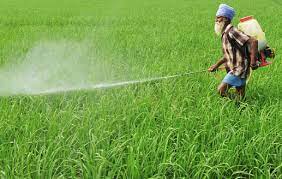
People don’t want this kind of work anymore. It is no accident that we see so many foreigners working in the fields. Mexicans in the USA, East Europeans in western Europe. In countries like India and Egypt we see more and more children working in the fields. It is hard, badly paid labor. We have an idyllic picture of agriculture in the time of our grandparents and greatgrandparents, but is was no fun at that time. It was very hard and tiring work, from early in the morning till late in the evening, every day.
.
Modern people are fond of technology; it makes our lives easier and more comfortable. “And we would stop modernisation in agriculture and go back to organic farming?”
“In Africa at least, half of the population works in agriculture…” . “Yes, I have seen with my own eyes what that looks like. Why do we accept that thousands of kilometers from here people work like our ancestors did in the 18th century, that many women have to walk 5 kilometers everyday to fetch water and collect firewood for cooking, and spend the rest of the day weeding in the fields, often without good tools – until their backs are crooked? African people yearn for technology that helps, like a mobile telephon to predict the weather and follow the prices in the market. Without that they stay in a spiral of hunger and poverty. So be careful when you extoll organic farming and even propose it as a model for the world.”
The Green Revolution
Borlaug was born in 1914 in a farming village in Iowa and as a boy worked on the land, together with his parents, grandparents sisters, uncles, aunties, and cousins. After studying genetics and phytopathology he started working in Mexico in 1944. It was his task to raise the yield of the wheat, because all varieties of wheat were affected by black rust. This disease kept the Mexicans underfed and poor. Borlaug sowed the plants on testing fields that he had to plow himself, without tools. He slept in an sleeping bag on the concrete floor. After years of trial and error he succeeded – by crossing and selecting – to create a variety that was disease resistent. Thanks to the use of fertilizer, pesticides and irrigation the grain production rose explosively, in Mexico, India and Pakistan and other countries. Later the same was done for rice in China and Indonesia. This is called the Green Revolution.
But the green revolution caused depleting of the soil and pollution of water and athmosphere. These effects are now admitted and tackled. Sensors, data and drones help farmers to work more accurately. A farmer can know better how much fertilizer, water and other things are needed. To-day American farmers use less and less chemicals per hectare and have bigger yields from less and less land. Thanks to technological innovation.
Borlaug did not mean to pollute the environment. “My grandfather watched the suffering of people in poor countries. He did what was possible to save them. What was the alternative? Would you be ready to say, okay, no innovations for me, I allow my family to starve to death. If that is the alternative environmenatl damage is maybe a side effect that we can accept.”
A new Green Revolution
Julie Borlaug studied international relations and worked for several international organisations. Now she works at Inari, an American start-up with a research facility in Gent (Belgium), which works in a different way from the usual . Inari offers the farmers seeds especially designed for their situation. Farmers normally pay for seeds with a range of qualities, like drought resistence, and resistence against several pests, which they in their region have no need for. “We think that is wrong, it is the way of the monopolist!” says Borlaug
What is more, Inari has mainly women in its management, very unusual, and more so in the field of biotechnology. And the scientists – also mainly women – use things like CRISPR-Cas, the revolutionary technique to process DNA in a selective way. In this way start-ups like Inari try to saw the legs of the big players like Bayer, Corteva, Syngenta and BASF, who together have 80% of the world market in seeds.
People say: “What you do is unnatural”
“If we grade up seeds in a lab under a microscope, in artificial light, in a white coat, it is not ‘natural’, no.The natural way is in the open field and lasts hundreds of years. My grandfather needed 13 years of crossing to get varieties that worked. Critics in that time called it unnatural too. Nowadays up-grading works a lot quicker – and we know much better what is changed in a seed or a plant”. Maybe the fear of modernizing is mainly caused by the speed of improving things. But is it not strange that people demand more speed in medical innovation? Because of much research and bureaucracy it can last twenty years before a new medicin is available. People complain about this, because suffering is continuing all that time. It is strange that this pressure is absent in food production.”
It is difficult to convince people that this can be the solution for food security. Most people argue based on emotions, but the people in Inari think based on science and technology. Boring for most people. Julie Borlaug adds: “ Even when talking with my relatives about my work, most are lost in half a minute. Critics promoting organic farming are better in communication and get more publicity. Fear sells. Fear about what we do to the environment, our food , our health. Often this fear is unjustified , but also misleading information is spreading fast”
“Take Greenpeace. They preach doom and gloom about agriculture They talk in a suggestive way about ‘poison’ of ‘genetic manipulation’. The millions they spend on campaigns in the social media could better be spent by looking for solutions. For every day some 25 000 people die of hunger related diseases. Do they profit from the fear Greenpeace is spreading? I don’t think so. Come on, you cannot be against poverty and at the same time against innovation”
Source: article by Marco Visscher in De Volkskrant, Februari 7th 2020,
Read also about genetic modified food and more about what is going on already: where’s the superfood?
And here is a lesson on genetic modified food and the discussion about it.
A list of costs and benefits of organic farming can be useful in a discussion.