
De relatie tussen mens en natuur was altijd al dubbelzinnig
Categorie(ën): Ecologie, Geschiedenis van mens en omgeving, Nieuws
Soms lijkt het wel alsof het uitsterven van dieren en planten door invloed van de mens een recent en westers fenomeen is. Milieuhistoricus Verstegen geeft vijf redenen waarom deze redenering niet altijd opgaat.
Recentelijk bleek nog uit een onderzoek dat de wildernis op aarde weer sterk achteruit is gegaan. Die wildernis-studie keek ook naar enkele gebieden waar mensen leefden. De onderzoekers gingen er namelijk van uit dat de levensstijl van oude traditionele lokale volkeren erg weinig impact op het milieu heeft.
Milieuhistoricus Wybren Verstegen (Vrije Universiteit Amsterdam) stelt vast dat dit niet klopt. De Indianen uit Noord-Amerika bijvoorbeeld leefden (in tegenstelling tot wat men altijd denkt) vaak helemaal niet zo duurzaam . Verstegen geeft vijf interessante weetjes over de mens en zijn complexe relatie met biodiversiteit. Deze feiten zul je zeker niet zien aankomen!
1. Een grote biodiversiteit is niet enkel een privilege van ‘de natuur’
Sommigen vergeten het wel eens, maar een grote biodiversiteit hoeft in principe niet alleen in de wildernis voor te komen. Het staat als een paal boven water dat de moderne economische groei de natuur enorme schade toebrengt. Alleen waar landbouwgrond uit cultuur wordt genomen kan er iets worden terug gewonnen. Desondanks kunnen ook landbouwsystemen in principe een grote soortenrijkdom herbergen. In Nederland was de biodiversiteit rond 1850 hoger was dan de oorspronkelijke toestand. Kleinschalige landbouw met gemengde bedrijven en zonder gif kunnen diversiteit vergroten!
2. Uitsterving door de hand van de mens gebeurde eerder dan je zou denken
Wij nemen vaak aan dat traditionele gemeenschappen veel respect hebben voor de natuur. Dat is echter niet altijd vanzelfsprekend, zeker niet als je naar het verleden kijkt. Zo werd het grootste deel van de megafauna (mammoeten, wolharige neushoorn e.d.) na de laatste IJstijd zo’n 11.000 jaar geleden op het noordelijk halfrond door ‘advanced hunters’ overbejaagd en stierf uit. In Australië en Nieuw-Zeeland gebeurde hetzelfde toen de mensen er verschenen. En dan moet je denken aan percentages van 70 tot 99% van de soorten
3. Ook niet-westerse bevolkingen hebben het potentieel om natuur te vernietigen
Zo tussen 900 en 1200 n.Chr. hadden de Anasazi-Indianen in Noord-Amerika hun woongebied (gelegen in het zuidwesten van de VS) compleet ontbost. Hun beschaving stortte daarna in. Hetzelfde gebeurde met de Maya’s in midden Amerika en andere culturen. In Afrika gebeurde dit ‘uitwonen’ van bossen niet of minder. Dit gebeurde niet omdat er weinig bevolkingsgroei plaatsvond doordat die groei steeds werd afgeroomd door tropische ziekten en slavenhandelaren.
4. De levenswijze van traditionele Amazone-bewoners was ook niet altijd even duurzaam
De bewoners van de Amazone waren landbouwers, maar na de ‘ontdekking’ door Europeanen zijn er zoveel van hen gestorven door Europese en Afrikaanse ziektes, dat zij zijn ’teruggevallen’ tot de status van jager-verzamelaars. De nieuwe wildernis, die er daardoor ontstond, is inmiddels 500 jaar oud. Hun levenswijze is nu inderdaad duurzaam en heeft weinig ‘impact’ op de wildernis. Maar vroeger was dat dus wel anders, ze hadden ook grote stukken bos ontgonnen. Maar hun landbouwsystemen kenden wel een grote soortenrijkdom.
5. Mensen kunnen ‘wildness’ op grote schaal creëren
Zoals historicus Michael Bess over Frankrijk schreef: ‘the wilderness disappears, but wildness is still possible’. Wij mensen kunnen ook ‘wildness’ creëren, zelfs op grote schaal. Dat zie je in de 19de eeuw, toen de veepest onder Afrikaanse runderen ruimte schiep voor het ontstaan van de rijkdom van de Serengeti. Dat was een toevalstreffer, net zoals het natuurgebied bij de Oostvaardersplassen (en hoe mooi die natuur is zie je in de film De nieuwe Wildernis). Mensen zetten hun hersenen in, nemen hun verantwoordelijkheid, in plaats van ‘op te gaan in de natuur’ of daar mee één te worden. Dat is een positieve insteek in de problematiek.
Bron: De kennis van nu, 12 september 2016 (aangepast)
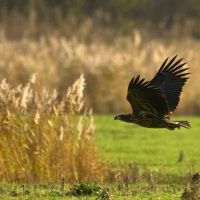
Foto: Zeearend in de Oostvaardersplassen
zie ook :De Mayasteden bezweken door milieucrisis
en over de vroegere landbouw in het Amazonegebied: Terra preta catching carbon,